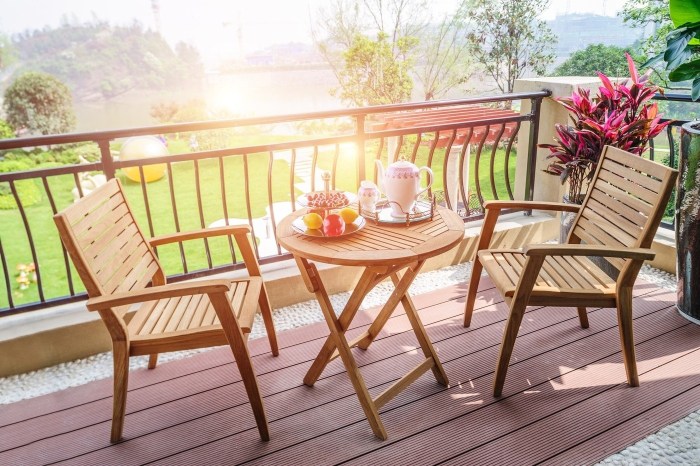
Transforming a small balcony into a stylish and functional outdoor oasis is achievable with careful planning and the right furniture choices. This guide explores creative solutions for maximizing space and aesthetic appeal, focusing on space-saving designs, durable materials, and clever decor strategies. We’ll delve into various styles, from modern minimalism to rustic charm, offering practical tips and inspiration for creating your dream balcony retreat, no matter how limited the square footage.
We’ll cover everything from selecting the ideal materials to consider – weighing the pros and cons of wicker, metal, plastic, and wood – to maximizing functionality through built-in storage and clever furniture arrangements. Learn how to choose accent pieces that enhance the ambiance without cluttering the space, and discover how to create a cozy, elegant, or functional atmosphere that perfectly suits your personal style.
Space-Saving Balcony Furniture
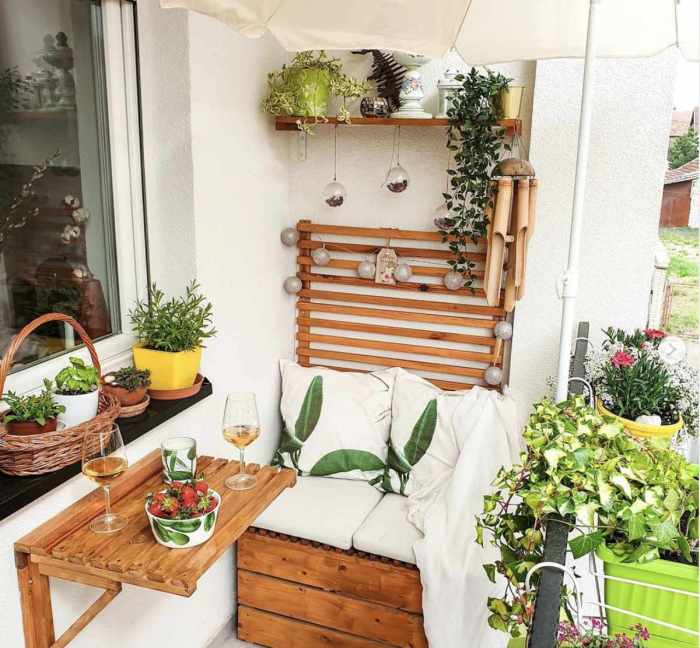
Creating functional and stylish furniture for small balconies requires careful consideration of both design and dimensions. The limited space necessitates pieces that are compact yet comfortable, maximizing usability without overwhelming the area. The following examples demonstrate how different design styles can achieve this goal.
Space-Saving Balcony Furniture Designs
Below are three distinct balcony furniture sets designed for small spaces, each reflecting a different aesthetic: modern, rustic, and minimalist. Dimensions are approximate and can be adjusted based on individual needs and balcony size.
Modern Set: This set features sleek lines and a neutral color palette. It includes a two-seater bench (48″ L x 24″ W x 18″ H), a small square coffee table (24″ x 24″ x 16″ H), and two stackable side chairs (18″ W x 20″ D x 30″ H) for additional seating when needed. The materials are primarily powder-coated steel and weather-resistant fabric.
Rustic Set: This set evokes a cozy, natural feel. It comprises a weathered wood bench (40″ L x 18″ W x 16″ H) with a built-in storage compartment, a small round wooden table (28″ Diameter x 18″ H), and two simple wooden stools (14″ Diameter x 16″ H) that can be tucked under the bench. The materials are reclaimed wood and wrought iron.
Minimalist Set: This set emphasizes simplicity and functionality. It consists of a single, slender bench (60″ L x 12″ W x 16″ H) made of a single piece of composite material, a small, minimalist side table (16″ x 16″ x 14″ H) with a hidden storage compartment, and a single foldable chair (18″ W x 20″ D x 30″ H) that can be stored easily when not in use.
Materials include durable composite wood and powder-coated aluminum.
Comparison of Balcony Furniture Sets
The following table compares the weight and material properties of each furniture set, highlighting their advantages and disadvantages for small balconies.
| Furniture Set | Weight (approx.) | Material | Advantages | Disadvantages |
|---|---|---|---|---|
| Modern | 75 lbs | Steel, Fabric | Durable, weather-resistant, easy to clean | Can be heavy to move, may feel cold in cooler weather |
| Rustic | 60 lbs | Wood, Iron | Charming aesthetic, built-in storage | Heavier than other options, requires more maintenance |
| Minimalist | 40 lbs | Composite wood, Aluminum | Lightweight, easy to store, space-saving | Less comfortable for extended periods, may not be as durable as other options |
Assembly Instructions for the Minimalist Set
The minimalist set is relatively easy to assemble. Tools required include a Phillips head screwdriver and a wrench.
- Unpack all components and check against the parts list.
- Attach the legs to the bench using the provided screws and wrench. Tighten securely.
- Assemble the side table by connecting the tabletop to the base using the provided screws and screwdriver.
- The foldable chair requires no assembly; simply unfold and use.
Choosing the Right Materials
Selecting the right materials for your balcony furniture is crucial for both its longevity and the overall aesthetic of your small outdoor space. The durability, weather resistance, and maintenance requirements of different materials significantly impact your furniture’s lifespan and your enjoyment of your balcony. Consider these factors carefully to ensure a comfortable and stylish outdoor area.
The choice of material significantly influences the furniture’s durability, weather resistance, and maintenance needs. Different materials offer unique advantages and disadvantages, requiring careful consideration based on your specific needs and preferences. Below, we compare several popular options.
Material Comparison: Durability and Weather Resistance
The following list compares the durability and weather resistance of common balcony furniture materials. Understanding these differences helps in making an informed decision aligned with your budget and desired aesthetic.
- Wicker: Generally offers a lightweight and aesthetically pleasing option. However, wicker’s durability varies greatly depending on the material used (rattan, willow, synthetic resin). Natural wicker requires regular protection from moisture to prevent rotting and damage. Synthetic wicker is more durable and weather-resistant, requiring less maintenance. It’s less susceptible to warping and cracking compared to natural wicker.
- Metal: Metal furniture, such as aluminum or steel, is often robust and durable. Aluminum is lightweight, rust-resistant, and relatively low-maintenance. Steel, while stronger, is prone to rust unless powder-coated or galvanized. Metal furniture can become hot in direct sunlight.
- Plastic: Plastic furniture is typically inexpensive and lightweight, making it easy to move and store. However, it can be less durable than other options and may fade or crack under prolonged sun exposure. It is also generally less aesthetically pleasing than other materials.
- Wood: Wood offers a classic and elegant look, but requires more maintenance than other materials. Hardwoods like teak are naturally weather-resistant and durable, while softer woods need regular treatment with sealants and weatherproofing agents to prevent rot and damage. Wood can also be susceptible to warping or cracking if not properly cared for.
Material Maintenance
Regular maintenance is key to extending the life of your balcony furniture, regardless of the material. The specific requirements vary considerably.
- Wicker: Regularly brush away dust and debris. For natural wicker, apply a water-repellent sealant annually to protect against moisture. Synthetic wicker typically requires less maintenance, but occasional cleaning with mild soap and water is recommended.
- Metal: Clean with mild soap and water, ensuring to dry thoroughly to prevent rust. For powder-coated or galvanized steel, this is usually sufficient. Aluminum generally requires less maintenance.
- Plastic: Clean with mild soap and water. Avoid harsh chemicals that can damage the plastic. Store it indoors during harsh weather conditions to extend its lifespan.
- Wood: Regularly clean with a soft brush and mild soap. Apply a weatherproofing sealant annually, or as needed, to protect against moisture and UV damage. Consider using a wood cleaner and conditioner periodically to maintain its appearance.
Aesthetic Impact of Material Choice
The material you choose significantly impacts the overall aesthetic of your small balcony. Different materials evoke different styles and moods.
For example, wicker furniture often creates a relaxed, bohemian feel, while metal furniture can contribute to a modern or industrial aesthetic. Wood furniture tends to lend a classic and elegant atmosphere, while plastic offers a more casual and less expensive option. The color and finish of the furniture also play a crucial role in the overall look and feel of your space.
Consider how the material and its color will complement your balcony’s existing design and your personal style preferences. A carefully chosen material can transform a small balcony into a stylish and inviting outdoor retreat.
Maximizing Functionality
Small balcony spaces demand creative solutions to maximize their utility. By carefully selecting furniture and strategically arranging it, you can transform a cramped area into a functional and enjoyable outdoor retreat. This involves incorporating clever storage solutions, choosing furniture with adaptable designs, and prioritizing pieces that serve multiple purposes.A well-designed small balcony layout should prioritize both comfort and efficiency.
This section will explore practical strategies and examples to achieve this.
Small Balcony Layout with Built-in Storage
Imagine a 6ft x 4ft balcony. A custom-built bench seat (6ft x 2ft x 2ft high) along one of the longer walls provides ample seating. This bench incorporates built-in storage underneath, accessed via a hinged lid. The storage area could easily hold cushions, gardening tools, or other balcony accessories. Opposite the bench, a small, foldable bistro table (2ft x 2ft) provides a surface for drinks and plants.
The remaining space allows for comfortable movement and prevents the balcony from feeling cluttered. A vertical planter (1ft x 4ft) could be mounted on the wall to maximize vertical space and add greenery. This layout uses every inch of available space effectively, combining seating, storage, and a surface for activities.
Incorporating Foldable or Stackable Furniture
Foldable and stackable furniture offers exceptional space-saving capabilities. Three distinct approaches can significantly improve a small balcony’s functionality. Firstly, using foldable chairs allows for flexibility. When not in use, these chairs can be easily folded and stored away, freeing up valuable floor space for other activities or simply providing a more open feel. Secondly, stackable storage boxes can serve both as seating and storage units.
When not needed for seating, these boxes can be stacked neatly, minimizing their footprint. Thirdly, a foldable table can transform the balcony from a relaxation space to a dining or workspace depending on the need. This adaptable furniture provides flexibility without sacrificing valuable square footage.
Multifunctional Balcony Furniture
Multifunctional furniture pieces are essential for maximizing utility in limited spaces. A bench with built-in storage, as described in the previous example, exemplifies this concept perfectly. Another example is a small, foldable table that can be easily converted into a small desk. This allows the balcony to serve as both a relaxation area and a workspace, effectively doubling its functionality.
Similarly, a storage ottoman can function as extra seating and provide concealed storage for blankets, books, or other items. These versatile pieces streamline the space and prevent the need for multiple, space-consuming individual items.
Balcony Decor Accent Pieces
Adding the right accent pieces can transform a small balcony from a functional space into a stylish and inviting retreat. Careful selection is key to avoiding clutter and maintaining a sense of openness. The following suggestions focus on maximizing visual impact while minimizing physical footprint.
Choosing the right accent pieces is crucial for creating a cohesive and visually appealing small balcony space. Overwhelming the area with too many items will negate the purpose of maximizing the limited space. The following suggestions provide a balance between aesthetic appeal and practicality.
Five Accent Pieces for Small Balcony Spaces
These five carefully chosen pieces can significantly enhance the aesthetic appeal of a small balcony without compromising its functionality or feeling cramped. Consider the overall style and color scheme of your balcony furniture when making your selections.
- A Hanging Planter Box: A vertically oriented planter box, perhaps made of woven wicker or metal, adds a touch of greenery without taking up valuable floor space. Imagine a rectangular box, approximately 12 inches wide and 24 inches long, filled with trailing ivy or cascading petunias. Its muted green and brown tones complement most balcony furniture.
- A Small, Decorative Outdoor Rug: A rug anchors the space and adds warmth and texture. Opt for a weather-resistant rug in a durable material like polypropylene, choosing a pattern and color that complements your furniture. Visualize a rug approximately 3 feet by 5 feet, with a geometric pattern in muted blues and grays, offering a subtle visual interest.
- String Lights: String lights create a warm and inviting ambiance, especially during evenings. Consider solar-powered lights for convenience, or battery-operated LED lights for flexibility. Picture warm white lights strung along the balcony railing, casting a soft glow on the space.
- A Small, Decorative Outdoor Throw Pillow: A single, weather-resistant throw pillow adds a pop of color and texture to your seating area. Select a pillow with a bold pattern or a solid color that complements the overall color scheme. Imagine a square pillow, approximately 18 inches by 18 inches, in a vibrant coral color, adding a splash of brightness.
- A Compact Outdoor Table Lamp: A small, solar-powered or battery-operated table lamp provides ambient lighting and a decorative element. Choose a lamp with a weather-resistant design and a style that complements your furniture. Picture a sleek, modern lamp with a frosted glass shade, providing a soft, diffused light.
Arranging Accent Pieces for Cohesive Style
Strategic placement of these accent pieces is essential to create a balanced and visually appealing space. Avoid overcrowding the area by distributing the elements evenly.
Imagine the arrangement: The rug is centrally located under the seating area. The hanging planter is positioned above the seating area, creating a vertical element. The string lights are draped along the balcony railing, providing soft illumination. The throw pillow is placed on the seating area, adding a pop of color. Finally, the table lamp is situated on a small side table, near the seating area, providing a soft light source.
Small Balcony Decor Mood Board
A mood board can help visualize different color palettes and themes. Consider three distinct styles:
Mediterranean Theme: Imagine a mood board with images of terracotta pots, blue and white striped fabrics, sun-bleached wood furniture, and lush greenery. The color palette would consist of warm terracotta, sunny yellow, deep blue, and crisp white.
Modern Minimalist Theme: This mood board would feature sleek, black metal furniture, geometric patterns, neutral-toned fabrics, and simple, clean lines. The color palette would primarily consist of grays, whites, and blacks, with pops of a bright accent color like mustard yellow or teal.
Rustic Chic Theme: This mood board would include images of weathered wood furniture, woven textures, warm lighting, and natural elements like stone and plants. The color palette would consist of warm browns, greens, creams, and muted blues.
Cozy Balcony Decor
Transforming a small balcony into a cozy retreat involves a thoughtful approach to design, focusing on creating a warm, inviting, and intimate space. This can be achieved through careful selection of textures, lighting, and color palettes, alongside strategic placement of soft furnishings. The goal is to maximize comfort and create a sense of seclusion, even within a limited area.Creating a cozy atmosphere on a small balcony hinges on several key elements.
The interplay of textures, lighting, and color schemes work together to evoke a feeling of warmth and comfort. Strategic use of soft furnishings further enhances this effect, creating a space where one can relax and unwind.
Texture and Material Choices
The selection of materials significantly impacts the overall feel of the balcony. Natural materials such as wicker, rattan, or wood create a rustic and inviting ambiance. These materials possess a warmth that synthetic alternatives often lack. For seating, consider cushions with plush fabrics like velvet or bouclé for added comfort and texture. A woven rug can add depth and warmth underfoot, grounding the space and visually expanding it.
The contrast between rougher textures, like a woven rug, and softer ones, like plush cushions, adds visual interest and depth. A jute rug, for example, offers a natural texture that complements wooden furniture, while a sheepskin throw adds a luxurious touch.
Lighting for a Cozy Ambiance
Lighting plays a crucial role in setting the mood. Harsh overhead lighting should be avoided; instead, opt for softer, warmer lighting options. String lights draped along the railing create a magical, intimate atmosphere, especially in the evening. Tabletop lanterns or candles (real or battery-operated for safety) add a flickering, romantic glow. Consider incorporating solar-powered lights for an eco-friendly and low-maintenance solution.
Dimmable LED lights offer versatility, allowing you to adjust the brightness to suit the time of day and desired ambiance. A well-placed floor lamp can also add a warm and inviting glow, creating a more relaxed and less stark environment.
Color Schemes for a Cozy Balcony
Color psychology plays a significant role in creating a cozy atmosphere. Warm, earthy tones like terracotta, beige, cream, and muted greens are ideal choices. These colors evoke feelings of calm and relaxation. Adding pops of color through accent cushions or plants can add visual interest without overwhelming the space. A predominantly neutral palette creates a sense of spaciousness and allows the textures and lighting to take center stage.
Avoid using overly bright or jarring colors, which can make the space feel smaller and less inviting. Think of a calming palette that evokes feelings of warmth and serenity.
Incorporating Soft Furnishings
Soft furnishings are essential for transforming a balcony into a cozy haven. Plush cushions in varying sizes and textures add comfort to seating. Throws draped over chairs or railings add warmth and visual interest. A small, comfortable rug defines the space and adds a layer of softness underfoot. These elements not only enhance comfort but also contribute significantly to the overall aesthetic.
Consider layering textures—a chunky knit throw over a velvet cushion, for example—to create visual depth and a sense of richness. The careful selection and arrangement of these soft elements are crucial to maximizing comfort and creating a sense of warmth.
Creating Intimacy and Seclusion
Even on a small balcony, a sense of intimacy and seclusion can be achieved. Strategically placed plants can create natural dividers, softening hard edges and offering a sense of privacy. A privacy screen or a vertical garden can further enhance this effect. Using curtains or blinds can also help to create a more enclosed and private space, shielding it from direct sunlight and prying eyes.
These elements contribute to a sense of refuge and tranquility, making the balcony feel like a personal sanctuary.
Elegant Balcony Decor
Transforming a small balcony into an elegant retreat requires a thoughtful approach to material selection, design, and decorative accents. By focusing on high-quality components and a cohesive aesthetic, even the smallest space can exude sophistication and charm. The key lies in creating a sense of refined simplicity, maximizing the impact of carefully chosen elements.High-quality materials and refined design are fundamental to achieving an elegant balcony.
The use of weather-resistant materials such as teak or sustainably sourced hardwood for furniture adds a touch of luxury. Forged iron or powder-coated aluminum furniture offers both durability and a sleek, modern aesthetic. Consider incorporating glass or polished stone elements in planters or side tables to enhance the sense of refinement. Clean lines and simple silhouettes in furniture design contribute to a feeling of spaciousness, while intricate detailing on smaller accents adds subtle visual interest without overwhelming the space.
Material Selection for Elegant Balcony Design
The choice of materials significantly impacts the overall aesthetic. For instance, a set of teak chairs with intricately carved details paired with a glass-topped side table creates a classic, elegant look. Alternatively, a modern minimalist aesthetic can be achieved with sleek, powder-coated aluminum furniture and minimalist planters made from polished concrete or ceramic. The key is to select materials that are both durable and visually appealing, reflecting the desired style and enhancing the overall ambiance.
Incorporating Decorative Elements for Sophistication
Strategic placement of decorative elements elevates the balcony’s aesthetic appeal. Elegant planters filled with lush greenery, carefully chosen flowering plants, or even miniature bonsai trees instantly add life and vibrancy. A small, carefully chosen sculpture or a piece of outdoor-appropriate artwork can serve as a focal point, adding a touch of artistic flair. Consider using decorative cushions and throws in rich textures and sophisticated patterns to add comfort and visual interest.
These elements should complement the overall design, creating a cohesive and elegant look. For example, a wrought-iron sculpture of a bird perched on a vibrant flowering plant would create a beautiful, sophisticated scene.
Elegant Color Palettes and Lighting Schemes
Color palettes play a crucial role in setting the mood and enhancing the elegance of the balcony. Neutral tones such as soft grays, creamy whites, and muted beige create a calming and sophisticated atmosphere. These can be accented with pops of color from carefully selected plants or decorative accessories. For example, a combination of soft gray furniture, white walls, and accents of deep teal in cushions and planters would create a serene and stylish space.
Lighting is equally important; soft, warm lighting, such as string lights or strategically placed lanterns, enhances the ambiance and creates a welcoming atmosphere in the evening. Avoid harsh overhead lighting; instead, opt for softer, diffused light sources to create a more intimate and elegant feel. For example, strategically placed solar-powered lanterns create a magical ambiance during evening relaxation.
Functional Balcony Decor
Transforming a small balcony into a functional and aesthetically pleasing space requires careful planning and a keen eye for detail. The key is to maximize every inch while maintaining a sense of style and comfort. This involves selecting furniture and accessories that serve multiple purposes and choosing a color scheme that enhances the feeling of spaciousness.Balancing aesthetics and practicality in small balcony design involves a thoughtful approach to furniture selection, color palettes, and the incorporation of functional elements.
For example, a foldable bistro table and chairs can provide seating when needed but easily fold away to free up space. Similarly, a vertical garden not only adds a pop of color and life but also provides a functional element by growing herbs or flowers.
Lighting Solutions for Small Balconies
Effective lighting is crucial for creating ambiance and extending the usability of a small balcony into the evening. Consider string lights draped across the railing for a whimsical, romantic feel, or wall-mounted sconces for a more sophisticated look. For task lighting, a small, portable lamp can be placed on a side table, providing adequate illumination for reading or enjoying a drink.
These lighting options not only illuminate the space but also contribute to the overall aesthetic appeal.
Storage Solutions for Small Balconies
Storage is a major challenge in small spaces, but clever solutions can alleviate this. Wall-mounted shelves are excellent for storing small items like plants, books, or decorative accessories. A slim, vertical storage unit can hold larger items while maintaining a sleek profile. Using baskets and containers can further enhance organization and add a decorative touch. Consider using storage solutions that double as decorative elements, such as woven baskets or decorative storage boxes.
Weather Protection for Small Balconies
Protecting your balcony furniture and yourself from the elements is vital, especially in areas with variable weather. A retractable awning can provide shade on sunny days and protection from light rain. Weather-resistant cushions and furniture are essential for longevity and comfort. A simple, lightweight cover can protect furniture when not in use. These measures not only safeguard your investments but also ensure you can enjoy your balcony regardless of the weather.
Organizing and Arranging Items on a Small Balcony
Organization is key to maximizing functionality and minimizing clutter on a small balcony. A strategic arrangement of furniture and accessories is essential. For example, placing taller items towards the back and shorter items towards the front creates a sense of depth and avoids visual crowding. Using vertical space with shelves and wall-mounted planters helps keep the floor space clear.
Regular decluttering ensures the space remains functional and visually appealing. Consider a minimalist approach to décor to avoid overwhelming the space. A clean and uncluttered balcony feels larger and more inviting.
Creating a beautiful and functional small balcony requires a thoughtful approach to furniture selection, material choice, and decor. By prioritizing space-saving designs, durable materials, and multi-functional pieces, you can transform a cramped outdoor area into a relaxing and inviting retreat. Remember to consider your personal style and create a space that reflects your individual taste and needs. With careful planning and a touch of creativity, even the smallest balcony can become a cherished outdoor sanctuary.
FAQ Compilation
What is the best material for balcony furniture in a humid climate?
Aluminum or powder-coated steel are excellent choices for humid climates due to their resistance to rust and corrosion. Wicker made from synthetic materials also performs well.
How can I protect my balcony furniture from the elements?
Use weatherproof covers during periods of inclement weather. Regularly clean and apply protective sealants or treatments as recommended for the specific material.
Where can I find space-saving balcony furniture?
Many online retailers and home improvement stores offer a range of space-saving balcony furniture options. Check both big-box stores and specialty outdoor furniture shops.
How do I choose the right size furniture for my small balcony?
Measure your balcony carefully before purchasing furniture. Prioritize pieces with compact dimensions and consider foldable or stackable options to maximize space when not in use.


